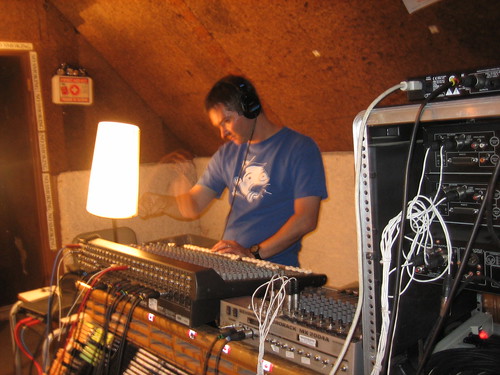
Here is the track list from Jamaican Echoes. Still working on the HTML for easier browsing...
Keith Hudson - Pick A Dub
Alton Ellis - Rock Steady
Big Youth – Cool Breeze
Slim Smith & The Uniques - My Conversation
Phyllis Dillon - Woman Of The Ghetto
Phyllis Dillon – Woman Of The Ghetto Version
Jackie Mittoo & Brentford Rockers - Sidewalk Doctor
Leonard Santic Chin & King Tubby - One Heavy Duba
The Upsetters & King Tubby - Black Panta
Bob Marley And The Wailers - Kaya
Prince Jammy - Dub To The Rescue
George Faith - Diana
Joe Mansano - Life On Reggae Planet
Aswad - A Rebel Soul
The Clash feat. Mikey Dread - Junco Partner
New Age Steppers- Guiding Star
Noel Ellis - Dance With Me
Clifton Joseph - Chuckie Prophecy/Dub
Tribesman Assault - High Times
The Incredible Bongo Band - Apache
Grandmaster Flash- The Adventures Of Grandmaster Flash On The Wheels Of Steel
Patti Jo -Make Me Believe In You
Bettye Lavette - Doin’ The Best That I Can (A Special New Mix)
Peter Tosh & Mick Jagger - Don’t Look Back (Don’t Space Out)
Grace Jones - My Jamaican Guy
Wayne Smith - Under Mi Sleng Teng
Patrick Andy- Jamming In The Street
John Wayne - Call The Police
Stephen Lenky Marsden & Prince Jammy - Sleng Teng Instrumental
Eric B & Rakim remixed by Coldcut - Paid In Full (Seven Minutes Of Madness)
Fela Anikulapo Kuti & Egypt 80- Army Arrangement
Massive Attack featuring Nusrat Fateh Ali Khan - Musst Musst
Bally Sagoo feat. Miss Lee - Ghidian Di Raniye (Dub)
The Orb remixed by Mad Professor - Towers of Dub
X Project featuring BeenieMan&Barrington Levy - Under Mi Sensi
Ice Vs. Palace - More Brother (Inbred Version)
Bomb The Bass - Bug Powder Dust (Kruder and Dorfmeister Session)
Jamayka Boyz - Rastaman
The Congos – Fisherman
Big Two Hundred - UK Decay
No Doubt featuring Lady Saw - Underneath It All
Easy Star All Stars - Time
Kode 9 and Spaceape – Sine
Justin Timberlake - My Love (Instrumental)
The Fire This Time - Warriors Dub
Chancha Via Circuito - Cumbia Malembe
Dubmatix- Fist Full Of Dub
Nick Holder - Moments In Dub
Jackie Mittoo & King Tubby - Dub Fi Gwan
Keith Hudson - Pick A Dub
Keith Hudson was a maverick producer in Jamaica, one of the earliest explorers of dub. His productions were marked by adventurous and avant-garde choices. His own nearly incompetent vocals add to the surreal nature of his work. At one point in the mid seventies he was poised for international success as an artist, but his debut album for Virgin Records Frontline subsidiary was a crossover flop. He moved to the USA and continued to work in dub and reggae until his untimely death in 1984. “Pick A Dub” is the title track to one of the greatest dub albums ever. Featuring Augustus Pablo’s melodica and King Tubby’s most inspired mixing, Pick A Dub was one of the first re-releases on the Blood and Fire label, capturing a new audience.
Alton Ellis - Rock Steady
Alton Ellis is a musician best known as one of the innovators of rocksteady music in the mid to late 1960s, which got its name as a genre from the song heard here. Rocksteady was slower than ska, though a clear descendant. Ellis moved from Studio One to its rival Treasure Isle for a few years, and it it was in this period where, along with his backing trio, The Flames (consisting of his brother Leslie Ellis, David "Baby G" Gordon and Winston Jarrett), he became well known for songs like "Girl I've Got a Date", "Cry Tough" and of course "Rock Steady.” Moving back to Studio One in 1968, Ellis subsequently worked on his own music but also with the likes of Phyllis Dillon and the Heptones, then later Junjo Lawes, Lloyd Daley and others, even when he moved to Canada the the England in the 1970s, and remained active in the reggae scene till his hospitalization in 2007. His songs have been sampled by many popular hiphop artists including KRS One, The Notorious B.I.G., Tupac Shakur and Blackstar. In 2006, he was inducted into the International Reggae and World Music Awards Hall Fame. He is the younger brother of the late Hortense Ellis, and the father of Noel Ellis and Christopher Ellis, who are both reggae singers.
Big Youth – Cool Breeze
Big Youth is a conscious Rasta who deejays in the style of U-roy, a syncopated toasting over rhythms that have often been used by other artists. He was the top deejay for the popular (and now Canadian) soundsystem Tippertone.1973 saw the first string of commercial successes for Big Youth, with 4 singles including "Screaming Target" (a version of K.C. White's "No No No" and Prince Buster's "Chi Chi Run"), the Derrick Harriott-produced "Cool Breeze," and the Joe Gibbs-produced "A So We Stay" (a version of Dennis Brown's "Money in My Pocket"), sat proudly on the Jamaican Top 20 for the entire year. He worked with many of the other top Jamaican producers from Keith Hudson and Gussie Clarke to Sonia Pottinger and Lee Perry, and is well-known as a producer in his own right. Big Youth’s performances are still lauded to this day, and his lyrics are clever, acerbic and humourous.
Slim Smith & The Uniques - My Conversation
Slim Smith was the lead singer for producer Winston Riley’s vocal group “the Techniques,” who gave the world such fine classics as “Queen Majesty” and “My Girl” from the Treasure Isle camp. After leaving the Techniques, Slim Smith joined the Uniques, a group which featured singers Jimmy Riley and Lloyd Charmers. While they had already cut many impressive sides with other lead vocalists, the group would find their greatest success with Smith, both on the charts and in terms of quality. In addition to a fine session for producer Willie Lowe in 1968, the Uniques cut their best sides for Bunny "Striker" Lee from 1967-1968. The band wrote several hits for Lee, including "My Conversation." This song was ultimately responsible for the subsequent version album. Winston Grennan's nagging piano hook line (on top of his original drumming!) together with some of The Uniques' best singing ever of a very beautiful song "Love your brothers. Love your sisters" produced an unforgettable record. Striker sold the rhythm track to fellow producer Rupie Edwards in 1974 and Rupie promptly put together ten instrumental and deejay versions of the rhythm on one album as "Yamaha Skank". This song has been sampled by a range of people from Canadian hiphop legends “the Dream Warriors” to Ragga-Jungle maestros “Congo Natty.”
Phyllis Dillon Woman Of The Ghetto (7”)
As Treasure Isle’s most successful female singer, one might have expected a more proliferate output from Phyllis Dillon, who worked primarily with legendary guitarist/arranger/composer Lynn Tait on the the majority of her songs. However, the small quantity of her available work is easily justified by its quality, and songs like “Woman of the Ghetto,” her version of “RockSteady” and “One Life to Live” are highly lauded in collector’s circles and have been reissued countless times. This song marked an interesting stage in both the original artist Marlena Shaw’s and in Phyllis Dillon’s careers; both were well-known for their beautiful singing and fine love songs, but “Woman of the Ghetto” is a socio-political statement about the communities surrounding these women, both in late-60s Jamaica and the US.
Phyllis Dillon – Woman Of The Ghetto Version
There have been several interpretations of this rhythm, and it was actually a few times, the original for Treasure Isle, once at Randy’s and of course at Studio One for the ubiquitous Coxsone Dodd. This is a straight instrumental take, with little difference to the vocal version, except of course that the melodic lead is a flute.
Jackie Mittoo & Brentford Rockers - Sidewalk Doctor (7”)
This dub is classic Jackie Mittoo, his take on the original uses some of the best of the original song’s elements (ie Winston Grennans drums) and layers melodic keyboard/organ tracks into an effect-heavy, but still clean-sounding mix. Mittoo’s significance to the canon of both reggae and dub cannot and should not be underestimated. As house keyboardist and arranger (and de facto bandleader) for Coxone Dodd at Studio One, Jackie had a crucial and sadly, mostly uncredited songwriting position working on a paltry “salary” – as opposed to being paid and credited for each project he worked on, estimated in the thousands. Tyrone Downie, who inherited his role as Bob Marley and the Wailers’ piano man from Mittoo, had this to say about Jackie: "Without Jackie Mittoo, there would be no reggae. He was an integral part of the Skatalites and the whole creation of rock steady. The evolution from rock steady to reggae is Jackie Mittoo. Is him really create reggae and even the piano skank on the rock steady bassline dem, is Jackie Mittoo. I don't know if we can ever pay back Jackie Mittoo for what he did for Jamaican music.I think this man should be honoured on the highest level by our country.” On a similar level, Mittoo, who moved to Canada in the late 60’s and worked with several artists and producers here, has been seen as one of the godfathers of Canadian reggae music as well.
Leonard Santic Chin & King Tubby - One Heavy Duba
King Tubby truly was dub’s leading light in Jamaica. This dubbed out take of the Augustus Pablo classic Harder Shade of Black did not originally reach as many audiences as perhaps the Pablo, Gregory Isaacs or I-Roy versions, but Tubby’s version definitely takes the furthest and most creative excursion from that original. He uses the studio’s effects and processing equipment as instruments unto themselves, while deftly wielding impactful snippets from the initial instrumental, Leroy Sibbles’ and Aston “FamilyMan” Barrett’ bass stylings and Tin Leg’s drums still factor prominently in the mix, while only the most haunting of Augustus Pablo’s organ trills float around the echoes and reverb so dearly beloved by Tubby’s fans. The experimentation “at the controls” (Jamaican slang for the console and outboard gear) is why producers like Leonard Santic flocked to Tubby; no other Jamaican producer or engineer came close to his creativity and courage to take a song apart and reassemble it with new elements, to construct something still similar but entirely different from its primary parts, often highlighting an instrumental track that may never have even made onto the original cut. Though Tubby could have stayed on as engineer for producer greats like Duke Reid, Bunny Lee and Byron Lee, he was happiest and most creative ensconced in his own studio, built onto the back of his house in Watergate, Kingston, JA.
The Upsetters & King Tubby - Black Panta
This song is a version both of Lee “Scratch” Perry’s song “Bucky Skank” (based on “Papa Was A Rolling Stone”) and Jackie Mittoo’s “Drum Song.” Blackboard Jungle Dub is full on dub: eerie sound effects, slow beats and sly, brooding bass, taking Perry’s eccentricity and complete lack of regard for convention and combining those traits with Tubby’s brilliance and creativity with his brand new 4-track console, resulting in a spooky hitherto-unparalleled magic. BJD is one of the first three all dub records released, and some would say even the first. August Pablo contributes atmospheric melodica, twisted into something ominous by Tubby, Perry’s cut-up vocals are made to sound even more ominous by the engineer, and the effects that Tubby uses are more prominent in than the foundation instruments. Lee Perry, though he often speaks as disjointedly as this and his other works with Tubby, spoke eloquently about the collaborative experience of making one of the most seminal dub records ever: “Tubby come to me ‘cause him was looking for adventure.I am the only adventurer. Because he was there in the beginning, he was looking for that adventure, that make him act from a baby, from nothing, from a sperm to a baby, and he still see the adventure, and recognize the adventure, dub’s adventure. He was brilliant. I thought he was my student, maybe he thought I was his student, but it makes no matter, I’m not jealous.”
Bob Marley And The Wailers - Sun Is Shining
This song was written at the height of the Wailers’ relationships with each other and Perry at the end of the 1960s. The version heard here is from the 1978 album “Kaya,” but in the original you can still hear hints of Peter Tosh on melodica and more of Bunny Wailer’s vocals. This album was recorded at the same time as their album Exodus, but many prefer the lightness of overall tone of Kaya. Interestingly, the menacing tone of this song belies its lyrics. Perhaps remnants of Perry remain in this song on Kaya at least, despite the more mainstream major record label’s push to exorcize eccentricity and build on the commercial success enjoyed by the Wailers after Eric Clapton covered I Shot the Sheriff.
Prince Jammy - Dub To The Rescue
Lloyd James made this stripped-down, fx-up version of Sun Is Shining as “Prince Jammy,” before he became known as “King.” At the point of this spooky resonant drum’n’bass dubbing adventure’s recording, Jammy had returned from an educative four-year stint in Canada and was working for Tubby, learning tricks like physically hitting the spring reverb and compressing the high hats to sibilant points of punctuation. The production techniques that Jammy learned from Tubby’s experience were a contributing factor to his meteoric rise to the most successful producer in Jamaica in the mid-80’s; though it is hard to find much similarity between the even more menacing dub of Marley’s happy-but-ominous original and any of Jammy’s later digital hits.
George Faith - Diana
In the early 1970s, this fine singer with his haunting tenor teamed up with Lee Perry, and as George Earl cut the first version of the William Bell song "To Be A Lover". His reconnection with Scratch brought him international acclaim in 1977-78, after Perry renamed him George Faith. A new version of To Be A Lover was issued abroad by Island records in July 1977, followed by a cover of the O'Jays' I've Got The Groove, the rendition heard here of Canadian legend Paul Anka's Diana and Wilson Pickett's Midnight Hour. The material was collected on the To Be A Lover album, which is ranked by many as the greatest set Perry cut with a solo vocalist. Faith maintained a respectable profile in the reggae scene with a number of producers on Jamaica. He consistently appeared on the hotel circuit in Jamaica's North Coast, and in 1990 began regularly performing in Toronto, Canada. Notable shows included a tour with Gregory Isaacs and Philip Frazier as well as the acclaimed Rock Steady Nite shows at the Skyline Hotel. Faith's final recording session occurred in 1992 when he released the album Just The Blues. He passed away in May 2003. Billy Idol’s worldwide smash hit of “To Be A Lover” is based on the Perry/Faith arrangement of the song.
Joe Mansano – Life On Reggae Planet
Mansano was originally from Trinidad but moved to London in the early 60s. Over the course of the decade he established himself as a producer, especially with the newly established Trojan label. Life On Reggae Planet was a minor recording, but very characteristic of British reggae circa 1970s, and features the iconic Anglo-Jamaican trombonist Rico Rodriguez (later of the Special AKA) The skanking organ line and ebullient rhythms of early reggae proved to be more durable in England than Jamaica, and was to remain an important influence on the Two Tone craze some ten years later.
Aswad - A Rebel Soul
A Rebel Soul appears on Aswad’s 1976 debut album on Mango. This self-titled debut album -- a collection chronicling the experiences of London's West Indian immigrant community was the product of the first British reggae band ever being signed to a major label (Mango was a subsidiary of Island.) By this point, Aswad already had enough of a reputation that touring Jamaican stars -- Bob Marley, Burning Spear, Dennis Brown, Black Uhuru -- often hired the group as backing musicians. Interestingly, they abandoned their conscious roots and embraced modern, more “pop” production techniques and scored quite a few more hits on the British charts with r’n’b, pop and later hiphop and dancehall crossover songs.
The Clash featuring Mikey Dread - Junco Partner
This song was originally a New Orleans r&b recording, and was embraced in 1980 by Joe Strummer, Mick Jones and their seminal punk band, “the Clash” to cover on their fourth album, Sandinista! With Sandinista! the band reached beyond punk and reggae into dub, rhythm and blues, calypso, and gospel. It also featured a strong political bent: the title comes from the left-wing guerilla organization of Nicaragua, the Sandinistas, who the previous year had overthrown the dictator Anastasio Somoza. The albums catalogue number 'FSLN1' refers to the acronym for Frente Sandinista de Liberación Nacional. Though Lee Perry had worked with them already on one single, the Clash was interesting in collaborating with another important figure in the Jamaican reggae community. Mikey Dread was the first person to have a reggae program on Jamaican radio and is lauded as one of the pioneers of commercially-successful reggae-crossover-collaborations. He added toasting and dub versions to the Clash’s songs, and was instrumental in developing their awareness of the similarities between the messages of punk and reggae. The Clash also covered Canadian reggae singer Willi Williams’ hit song “Armagideon Time,” which contained a similar socio-cultural message.
New Age Steppers – Guiding Star
New Age Steppers brought together players from punk and reggae bands in England. Participants included Keith Levine of PIL, George Oban of Aswad, Mark Stewart of the Pop Group, future superstar Neneh Cherry and free improviser Steve Beresford. But the central figure was the inimitable Ari Up, then of the Slits. Her strangled yet rootsy tone was the perfect complement to this particularly angular reggae hybrid. Guiding Star was originally written by Leroy Sibbles, and subn by Horace Andy, later known for his work with Massive Attack.
Noel Ellis –Dance With Me
Recorded in Toronto during 1979, this album from the son of Alton Ellis had Jerry Brown at the production helm, allowing Noel Ellis to write emotional lyrics with a firm backbone of reggae on which to lean. Brown was a reggae producer/artist (and car bodywork repair man) from Jamaica, but decided to better himself needed to get a job in America, which ended up with him living in Canada. At the time it was necessary to do a stint in Vietnam to live in America, so the peace-loving Brown decided that Canada would be a safer bet, and after setting himself up in Ontario, began work on the Summer Records label. Prince Jammy, Willi Williams and Jackie Mittoo were frequent visitors/paid employees at the studio; both Willi and Jackie can be heard on this incredibly dubby mix, along with other guest superstars Johnny Osbourne and Bongo Gene.
Clifton Joseph - Chuckie Prophecy/Dub
“Chuckie” garnered long-time Toronto-dub poet Clifton Joseph a Juno nomination in 1990, showing the power of the spoken word when combined with the infectious riddims of dub music. His words in our interview with him explain how a poet can utilize the music as a canvas for expression, and “Chuckie” shows us that the combination can make you tap your foot, giggle and simultaneously contemplate the constructed artifice of living in an urban reality of the “concrete jungle.” Clifton is a journalist as well as a poet, a frequent contributor to the CBC and also to the libraries and classrooms of students whom he inspires with his words and visits to classes at all levels. Dub poetry is now an international accepted poetic style, and we have prominent Canadian poets Joseph, Lillian Allen, Dr. Afua Cooper, Devon Haughton, Peculiar I and the rest of the Dub Poet’s Collective (co-founded by Joseph) to thank for Canada’s prominence in a global medium.
Tribesman Assault – High Times
New York dub master Lloyd “Bullwackie” Barnes had such a small scale operation that many of his works featured minimal graphics or even identification. Such is the case of Tribesman Assault, identified only by a stcok graphic on its plain yellow cover. The music contained is a heady brew of funky intros and off key yet deeply rootsy grooves. Bullwackie’s mixing style is often compared to Lee Scratch Perry. Over the last decade, cologne’s Rhythm and sound have reissued dozens of Wackies albums on their Basic Channel imprint, opening up a parallel universe of roots grooves to the more celebrated era in Jamaica.
The Incredible Bongo Band – Apache
Apache is one of the most important breakbeats in hip hop history. The sound of its drums was extremely influential on the form itself in the early days. The drummer is ace sessioneer Jim Keltner, then fresh from his work with Eric Clapton’s Derek and the Dominoes. The IBB were the creation of Michael Viner who took Keltner and West coast bongo player King Erisson to Vancouver to put together their debut album. Viner sought to take advantage of Canada’s then new Canadian content laws by recording in Canada in order to garner airplay for his project. This album was a success, and Apache, a cover of a surf instrumental by the Ventures in 1961, became a must dance classic for any b-boy or b-girl.
Grandmaster Flash – The Adventures Of Grandmaster Flash On The Wheels Of Steel
…only goes to prove the canonization of “Apache” had occurred early on in hip hop history. Apache was the only old school track included in the first ever ‘megamix’ of his turntable artistry. Flash did it live in the studio, and inspired nascent DJs across America.
Patti Jo – Make Me Believe In You
In 1975, Curtis Mayfield was continuing his career as a soul music producer, which he had been parallel to his own singing career for more than a decade. His “Sweet Excorcist” album featured his own psychedelic soul vertion of “Make Me Believe In You”, but Patti Jo cut a more direct version for the Buddah label. Tom Moulton extended each of the components in the song to create a seven minute meditation on the meaning of the lyrics. This proto-disco track’s drumming was the kind of thing influencing Sly Dunbar’s drum patterns in Jamaica, as heard on “Don’t Look Back”.
Bettye Lavette – Doing The Best That I Can
Prior to her comeback this decade, “Doin The Best That I Can” was Bettye Lavette’s best known song. Ironically, she had already parted ways with the label before the tune was released. Remixer Walter Gibbons broke all the rules on this mix – the backing vocals are louder than the lead, the most prominent instrument is a glockenspiel, and there is no bass line for at least 5 of this songs 11 minute length. This song is a perfect bridge between disco’s reAfricanization of percussion and the minimalism of techno in the following decade. Gibbons was one of the most abstract disco mixers of the time and a true pioneer of the 12” single’s possibilities.
Peter Tosh & Mick Jagger - Don’t Look Back (Don’t Space Out)
The Rolling Stones do not need an introduction, the reason for this song’s inclusion is simply that it showcases both the instrumental and the mixing/production prowess of drummer Sly Dunbar and Robbie Shakespeare who changed the face of reggae several times. In 1976, they introduced a harder beat called "Rockers", which supplanted the then prevalent "One drop" style, then introduced the "rub a dub" sound in the early 1980s. Sly and Robbie were important in developing the trend towards computer assisted production as well.In 1992, they instituted two separate sonic novelties with the hits "Bam Bam" and "Murder She Wrote" by Chaka Demus & Pliers. Chaka Demus' rough toasting DJ vocals were matched with and complimented by Pliers' sweet, melodic, soul-influenced singing; this unusual vocal pairing was championed by Sly and Robbie. This predates and may have influenced the recent trend in some hiphop where a song's "hook" or chorus is sung by a guest, while the verses are rapped. Furthermore, in "Bam Bam,” Sly introduced Indian tabla sounds in his drum beats, showing off the dexterity in studio that earned the duo collaborations with huge mainstream artists as well as the reggae elite.
Grace Jones - My Jamaican Guy
One of the songs recorded by supermodel, popstar and film icon Grace Jones at Nassau’s Compass Point Studios, “My Jamaican Guy” highlights how her producers Sly Dunbar and Robbie Shakespeare injected the dub ethos of creativity and experimentation with sound into a popular music crossover project. With three such innovative Jamaicans working on an album, it is no wonder that this song achieved success on both the US and UK charts in 1983. Grace Jones’ singular contralto voice allows her to sing in two modes: her monotone speak-sing as in songs as well as in an almost soprano mode. Her vocal range spans two-and-a-half octaves. This makes her the perfect vehicle for Sly and Robbie’s inventiveness and ingenuity. LL Cool J sampled this song for his 1995 single,"Doin' It!"
Wayne Smith - Under Mi Sleng Teng
Under Me Sleng Teng caused an overnight sensation with its hard-hitting digital rhythm. It was the first reggae song that didn’t use a group of musicians as its foundations, instead the cheap Casio keyboard sounds used were reproducible with almost exactly the same results. King Jammy had hit on the formula to make recordings cheaper (you don’t need a band if you have synthesizers,) faster (bands could take hours to record a single song,) and most importantly, globally accessible in their means of production and the resulting “sound.” Ironically, there has been much debate as to the original authorship of this song, so the malleable palette that a producer can utilize with digital fx and synthesizers is not necessarily a good thing. It is hard to prove who did what! Over 150 different vocals for this rhythm exists, and some of them are mammoth hits from the reggae canon, ie. including Tenor Saw (with "Pumpkin Belly"), and Johnny Osbourne (with "Buddy Bye")
Patrick Andy - Jamming In The Street
Patrick Andy often acted as an understudy to singer Horace Andy in the 1980s, but on this sleng teng track, his voice bears most striking resemblance to Sugar Minott.
John Wayne - Call The Police
Little is known about Jamaican singer John Wayne, but this version of sleng teng was anthemic.
Stephen Lenky Marsden & Prince Jammy - Sleng Teng Instrumental
The original instrumental, complete with the melodic lead played on the Casio MT-40 keyboard, and dubby effects laid down by Prince Jammy. Again, this was the first computerized rhythm in the reggae canon. Stephen Marsden graduated from the school of Jammys to become a successful producer in his own right, frequently collaborating with Sly and Robbie.
Eric B & Rakim remixed by Coldcut – Paid In Full (Seven Minutes Of Madness)
Paid In Full was the title track of Eric B and Rakim’s debut album. Fashioned from two samples – the drumbeat “Ashley’s Roach Clip” by Chuck Brown and the soul Searchers (later to become infamous as part of Milli Vannilli’s “Baby Don’t Lose My Number”) and disco diva Fonda Rae’s “Over Like A Fat Rat”’s bass line. British unknowns Coldcut produced this revision in the vein of New York sample pioneer Steinski, but with a greater ear for pop hooks. Eric B. hated this mix -calling it “that disco bullshit”. Ofra Haza’s successful international career was launched as a result of this song.
Fela Anikulapo Kuti – Army Arrangement
The king of Afrobeat needs no introduction. From 1969 onwards, Fela Kuti fused James Brown rhythms with jazz and highlife to create one of the most exciting dance musics of the 20th century. In 1985, he had been imprisoned on a highly dubious currency fraud charge, leaving the “Army Arrangemnet” album incomplete. His Franco-American record company, Celluloid, turned the tapes over to Bill Laswell, who overdubbed Sly Dunbar’s electric drums, Aiyb Dieng’s percussion and Parliament/Funkadelic keyboardist Bernie Worrell. Laswell defended replacing Kuti’s sax solos with Worrell’s organ work by saying ‘the fact is, Fela can’t play sax’. Many Fela fans hate this album but it works on both a conceptual level and as a hard hitting song.
Massive Attack featuring Nusrat Fateh Ali Khan - Musst Musst
Nusrat Fateh Ali Khan was a Pakistani musician, primarily a singer of Qawwali, the devotional music of the Sufis (a mystical tradition within Islam). He was featured in Time magazine's 2006 list of 'Asian Heroes.’Traditionally, Qawwali has been a family business. Nusrat's family has an unbroken tradition of performing qawwali for the last 600 years. Though he died in 1997, he is one of the most popular Pakistani singers of all time. Mustt Mustt was not his only dub venture, He embraced western pop music, teaming up with Peter Gabriel and Eddie Vedder; in 2007, posthumously his voice returned with the help of Italian dub reggae producer Gaudi. Their CD is called Dub Qawwali. Massive Attack began as an offshoot of the popular mid-1980s sound system The Wild Bunch. The core group consisted of three members, Robert Del Naja ("3D"), Grant Marshall ("Daddy G") and Andrew Vowles ("Mushroom"), along with occasional Wild Bunch collaborator (and also Del Naja's roommate) Tricky. The music was more complex, layered, and atmospheric than hip-hop, earning it the designation of trip-hop, with its unique British tone and aesthetic. The group were prominent in the 1980s Bristol club scene, and are considered pioneers of trip-hop, this song appeared on many compilations and was a club smash for two years after its release.
Bally Sagoo – Ghidian Di Raniye (Dub)
Sagoo was a hotshot young producer from Birmingham, England who had already releases several disc on the Oriental Star label, England’s best known Bhangra label. In 1991, his homage to reggae, ragga and dub was celebrated with a collection of tracks entitled “Essential Ragga” in which each vocal version was accompanied by a dub. Sagoo became the most influential producer of Asian Underground in its early days, although he didn’t receive the same overground (a truly relative term in this case with sales of bhangra records and tapes outstripping many “massive” club hits) exposure as later artists such as Asian Dub Foundation and Talvin Singh.
The Orb remixed by Mad Professor- Towers of Dub
Founded in 1988 by Alex Paterson and KLF member Jimmy Cauty, The Orb began as ambient and dub DJs in London. Their early performances were inspired by ambient and electronic artists of the 1970s and 1980s, most notably Brian Eno and Kraftwerk. Because of their "trippy" sound, The Orb developed a cult following among clubbers looking for a chillout space, and Patterson’s way of manipulating obscure samples beyond recognition in their albums and concerts made them famous. During their live shows of the 1990s, The Orb performed using digital audio tape machines optimised for live mixing and sampling before switching to laptops and digital media. Despite changes in their performance method, The Orb have maintained their colourful light shows and psychedelic imagery in concert. These visually intensive performances prompted many critics to compare The Orb to Pink Floyd.
British dubmaster the Mad Professor is producer and engineer known for his original productions and remix work. He is considered one of the leading producers of dub music’s second generation and was instrumental in transitioning dub into the digital age. He is a prolific producer, contributuing to or producing nearly 200 albums. His early work was characterized by few vocal tracks and heavy echo, reverb, and phaser effects on the instrumentals. Eventually, he began to experiment with electronic sounds and effects alongside the traditional instruments. Synthesized sounds began to find a place in his mixes. This experimentation caught the attention of artists outside of reggae and dub genres and led to Mad Professor's work with electronic artists
X Project featuring BeenieMan & Barrington Levy - Under Mi Sensi
Ragga-jungles most prolific and best known crew Congo natty released over 30 “remixes” utilizing vocals from Jamaican reggae over the frenetic but hypnotizing beats crafted by Rebel MC. They were unusual for the genre in that Rebel MC’s links to Jamaica provided him with the access necessary to gain permission from the original artists in an era and genre that are defined by bootlegs. Rebel MC’s Congo Natty crew brought many singers to the attention of the public, most notably British singer Top Cat and Jamaican superstar Jah Cure, whose first songs were actually recorded for the jungle audience (a fact which would likely dismay his legions of rasta fans.)
Ice Vs. Palace – More Brother (Inbred Version)
Possibly the single least likely artist in this documentary is Will Oldham aka Palace aka Bonny Prince Billy. “More Brother” sees him desecrated by Ice, an industrial dub project of Kevin Martin, who remains active and influential with his horrorcore version of dancehall as the Bug. Although both Macro Dub Infection compilations were landmark releases, they have a mixed reputation among dub aficionados. These albums’ almost complete lack of Jamaican sonic signifiers guaranteed adventurous listening for all.
Bomb The Bass – Bug Powder Dust (Kruder and Dorfmeister Session)
This song is a very interesting post-modern dubbed out remix. 1995 saw the release of Bug Powder Dust to an unsuspecting public in the UK. Bomb The Bass embodied the reggae notion of a collective around a single producer, in this case London-born Tim Simenon, with artists like Justin Warfield, Sinaed O’Connor and the On-U Sound people. This song in its original form opens with the words of Peter Weller's William Lee in Cronenberg's film adaptation of Naked Lunch, "I think it's time to discuss your philosophy of drug use as it relates to artistic endeavour," and this ethos permeates both the Bomb the Bass version and the K&D remix. The dub philosophy involves experimentation, abstraction and transformation; remix kings Kruder and Dorfmeister take pieces out, add in new elements and dub it all into something new. Taking a hiphop/rock song and turning it into a European dub classic is just another day’s work for them, and forms the basis of their international acclaim. The K&D Sessions – 2 cds of amazingly diverse music - blended their artfully bass-heavy music with effect-laden vocals into a dubby, tough but sexy collection of other people’s music changed to sound entirely different and in some cases, arguably better!
The Congos – Fisherman
Fisherman is drawn from perhaps the most important reggae reissue ever, The Congos Heart Of The Congos. Considered to be the apex of Lee Perry’s career, its outer space spiritual rockers sound was rejected by Chris Blackwell for Island Records upon first listening in 1978. It was bootlegged for years until London’s Blood and Fire Records decided to do this masterpiece justice. In 1996, they remastered the album at Abbey Road Studios and discovered 15 minutes of additional mixes which added greater depth to deluxe package. Ten years later, Blood and Fire released a “one rhythm album” (where an entire album is composed of different artists voicing versions of on one backing track) called Fisherman Style. This disc represented seventies artists like Big Youth and Sugar Minott and contemporary stars Luciano and Luton Fyah providing multiple perspectives on the Congos’ original.
Jamayka Boyz – Rastaman
Ballistic Brothers’ incarnation the Jamayka Boys provide sublime dub-house from the reknowned Junior Boy’s Own label and (and as one reviewer noted) “a bass-line that causes planes to drop from the skies.” This comes from the label that brought us Underworld and their song Born Slippy, the anthem from the film Trainspotting! Underworld’s song “Rez” also utilizes similar dub techniques; throbbing basslines, reverb and snippets of patois that you can actually understand combine to make a danceable but mellow house tune. Electronica wizard Ashley Beedle called “Rastaman” an homage to King Tubby in 4/4, a description that fits this lovely 10” record perfectly, and of course we must give props to the vinyl-loving public in the UK, as the warmth and low end harmonics of vinyl only add to the overall richness of sound, hopefully it will translate even through the compression for radio that you’ll hear when this song plays.
Big Two Hundred – UK Decay
Possibly named after the punk/gothic group of the same name, Big Two Hundred’s sound strongly evokes the early 80s. This decade has seen a revival of some of the more esoteric dub experiments of No Wave era New York and post punk London. “Modern Wild Dub” on Germany’s Select Cuts label compiles some of the best examples of this retro-futurism. Big Two Hundred’s sole full length album was release on DC Records, a British label specializing in atmospheric sounds from experimental rock to Italian film scores.
No Doubt feat Lady Saw – Underneath It All
No Doubt’s “Rock Steady” album was another worldwide hit for the group which came out of the Orange County ska/punk scene. Gwen Stefani et al. have not sanded down their edges all the way during their prolonged reign in the mainstream. Rather, Rock Steady added the new creative stimuli of reggae, dancehall and dub to their palette. Working with Sly and Robbie and guest vocalist Lady Saw, Underneath It All was a number 1 hit in many countries and won a Grammy, making Lady Saw the first ever female dancehall artist to win the award.
Easy Star All Stars – Time
Pink Floyd didn’t know it, but their music was dub from the get-go! New York band the Easy Star All Stars’ bassist is the owner of Manhattan’s Jammyland, one of the finest places to find vintage reggae and dub in North America. As such, the transformation of Pink Flowd’s most popular album, the Dark Side of the Moon is given almost reverential treatment here, respectful reinterpolations do not detract from the songs’ original beauty; more bass, added vocals (sung most tastefully) and a reggae skank add a modern touch to the songs they cover. The deejay combo track "Time," on which Corey Harris' baritone is counterbalanced by Ranking Joe's toasting is awesome, and those alarm clocks that have jolted stoners around the world for over 35 years sound a lot less discordant with a whole bagga reverb!
Sine – Kode 9 & The Space Ape
Of all the British urban subgenres that have emerged this decade, dubstep has had the greatest international fame. The term gained widespread blog fame around 2005 thanks to a sound which had coalesced around dread-filled, harshly synthetic downtempo music. Roughly half the tempo of drum and bass, it almost resembled late 80s “industrial dance” music with traces of Caribbean and South Asian elements. As with ‘golden age’ dub, dubstep evokes a violent and pessimistic atmosphere. But that’s not the whole story: Kode 9 and The Space Ape’s “Memories Of The Future” (2006) was a landmark record of hard beats, atmospheric sound design, wordless soul, and the Space Ape’s chilling science fiction/fact flow like an Anglo-Jamaican Darth Vader. Prince's rap-like "Sign Of The Time" is transformed into unrecognizability here. These days, dubstep artists have doubled up the beats and begun creating some of the most amazing Africanized drum machine patterns ever devised.
My Love (Instrumental) – Justin Timberlake
Speaking of beat doubling…. Mr. Timberlake’s artistic reputation was forever cemented with this song. A very ambitious arrangement and super-hooky vocals added up to a smash hit. But take away the vocals, and the dub influences are clear – the keyboard syncopates in classic Tubby fashion as it fades on top of a minimal, funky rhythm.
The Fire This Time – Warriors Dub
As mentioned in the documentary, The Fire This Time is production collective who use dub to explore cultural and political connections between black and indigenous peoples around the world. Based around Pat Andrade, this project’s dub album attracted a strong cast of contemporary dub artists. This mix was done by British dub vet Nick Manasseh. Other artists on this album include Chuck D, Adrian Sherwood, Michael Franti and Lee Scratch Perry
Chancha Via Circuito – Cumbia Malembe
There could very well be a documentary entitled “Colombian Echoes” due to the flourishing of cumbia. Though cumbia is Colombian music through and through, it is popular throughout south and central America. Due to its similarity to reggae, dub and dancehall hybrids of cumbia are common, especially this decade. Though Chancha Via Circuito is Argentine, it’s entirely likely that a dubwise Mexican cumbia producer like Toy Hernandez would be throwing this track down at any one of his sets. “Cumbia Malembe” is the most current track in this documentary, it’s still making the rounds on the internet and on radio stations around the world.
Dubmatix – Fist Full Of Dub
Jesse King aka Dubmatix has just released his third album, Renegade Rocker. This album is the most star studded reggae related release in Canadian history, graced by the vocals of Michael Rose, Sugar Minott, Linval Thompson, Wayne Smith and Willi Williams. He has described his sound as “roots reggae on top of a house beat”, and Fist Full Of Dub bears out that description. Live, Dubmatix employs a bassist and keyboardist to broaden out his laptop driven sound.
Nick Holder – Moments In Dub
DJ Chocolate’s fellow CKLN programmer, Nick Holder, predates Dubmatix sound to a degree with this straightforward and satisfying jack of the Linval Thompson’s All Stars “Rock Me In Dub”. Holder’s DNH label has released a range of beats for clubs, starting with house, but incorporating jazz, hip hop and soul from all over. Dub has never been far from his mix. Like too many Canadian artists who specialize in groove music, Holder has had greater success in Europe.
King Tubby & Jackie Mittoo – Dub Fi Gwan
Jackie Mittoo was much more than Jamaica’s – or Toronto’s – answer to Booker T. His propensity for spooky chords, jazz chops and his ingenious keyboard programming made him ideal for dub. Dub Fi Gwan is a dub version of his instrumental “The Sniper”, without the Jimmy Smith-like organ solo. Only a few washes of keys remain while Sly Dunbar’s heartbeat drumming propels the song into a trance.
Labels: dub, electronics, funk/soul, hip hop, jungle/drum and bass, reggae, world music
 We're barely past the solstice and already we're deep into the Cold Weather. For most of North America, that signals the end of the reggae season.


 Tinariwen